Québécois kitchens have the aroma of cloves, cinnamon, and slow-simmered meat during a Canadian winter. For generations, the art of the French-Canadian holiday feast has been less about following rigid instructions and more about the “pincée” of this or the “soupçon” of that, passed down through whispers and shared stovetops. Preserving these traditions is a way of honouring the resilience of our ancestors who turned simple, hearty ingredients into legendary comfort food. When we share a meal like Tourtière or Ragoût de Boulettes, we aren’t just eating; we are participating in a living history that spans over four hundred years of life in the St. Lawrence Valley.
A Culinary History Rooted in the Land
The story of Québécois cuisine is one of adaptation and survival in a beautiful but often unforgiving climate. Early settlers brought their French culinary foundations to the New World, but they quickly learned to incorporate local game and techniques learned from Indigenous peoples. By the 19th century, dishes like the meat pie became staples of the Réveillon, the traditional late-night feast held after Midnight Mass. While the specific spices might vary from the Saguenay to the Eastern Townships, the heart of the meal remains the same: it is designed to warm the spirit and sustain the body through the coldest months of the year.
The Crown Jewel of the Table: Authentic Tourtière
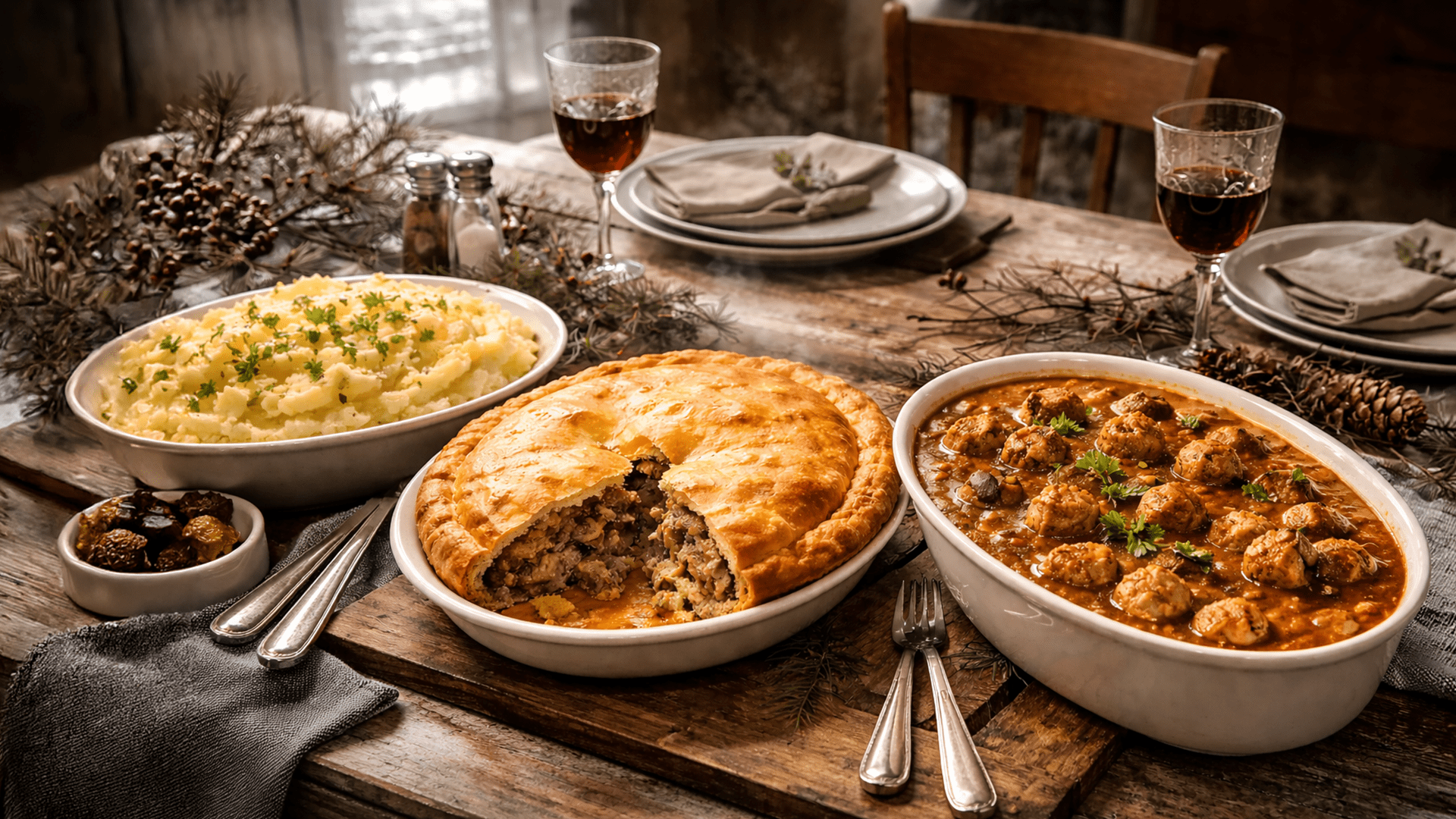
If you ask five different families for their authentic Tourtière recipe you will likely get five different answers regarding the meat blend. However, a true traditional pie usually relies on a mix of ground pork and beef, though many old-school versions still call for veal or wild game. The secret to that unmistakable holiday flavour is the spice profile, dominated by ground cloves, nutmeg, and allspice. You want to slow-cook the meat with onions and garlic until it is tender, then fold in a bit of mashed potato to bind everything together before tucking it into a flaky, lard-based crust. Bake it until the pastry is a deep golden brown, and always serve it with a side of homemade green tomato ketchup or pickled beets to cut through the richness.
While the name is now synonymous with ground meat, the term originally stems from the Tourte Voyageuse, or Passenger Pigeon, an abundant wild bird that early settlers and fur traders—the Voyageurs—once relied upon as a primary source of protein for their deep-dish pies. As these birds disappeared, the recipe adapted to include farm-raised meats and trade-route spices like cloves and cinnamon, evolving into the iconic holiday staple that remains a tribute to the rugged history and transcontinental trade of early Canada.
Savoury Comfort in a Bowl: Ragoût de Boulettes
No festive spread in Quebec is complete without a steaming tureen of Ragoût de Boulettes, a dish that embodies the warmth of a family kitchen during the winter holidays. While some traditional versions utilize pork hocks for depth, this lighter yet equally rich preparation features stewed chicken as the foundation, providing a savory broth that perfectly complements the perfectly seasoned meatballs. These boulettes are typically crafted from a blend of veal and panade, bound with eggs and seasoned with a fragrant mix of cinnamon and cloves that evokes the distinct aroma of a French-Canadian Christmas. The hallmark of this dish is the browned flour used to thicken the sauce, which gives the ragoût a toasted, nutty character and its signature deep colour. It is a slow-process meal that requires patience, as the meatballs must simmer gently alongside the tender chicken until the flavours have fully married and the sauce reaches a velvety consistency.