A shifting trade landscape: When America no longer feels like the safe harbour
Over the past few years, the trade strategy of Donald Trump and the U.S. — one that emphasises tariffs, unilateral action and “America First” economics — has unsettled business leaders and trading partners alike. The result? Some of those businesses are looking north, to Canada, as a more stable alternative hub for trade and investment. In turn, Canada is quietly positioning itself as the comfortable, less-volatile backstop for global companies navigating a more unpredictable U.S. economy.
Canada’s opportunity when the U.S. flexes tariffs
When the U.S. began imposing broad tariffs and threatening key trading relationships, Canada’s long-standing economic integration with its southern neighbour suddenly became a liability as much as an asset. For instance, the Canadian economy is heavily exposed — roughly three-quarters of Canadian merchandise exports head to the U.S., representing nearly one-quarter of Canada’s GDP (econofact.org). In that context, when business leaders began to witness the U.S. as a less reliable destination, Canada’s pivot toward diversifying trade relationships became not just prudent, but urgent.
At the same time, Canada’s government made it clear that diversification was the plan. In Budget 2025, for example, Canada set a goal of doubling exports to non-U.S. markets over the next decade, generating roughly C$300 billion in new trade outside the U.S. border (budget.canada.ca).
Business finds refuge in Canada-friendly corridors
One telling example comes from Vancouver-based apparel maker Anian. Faced with unpredictability in U.S. trade policy, the company opted to deepen ties with Europe instead of doubling down on the U.S. market. As founder Paul Long put it: “The United States is very self-focused … we see more promise and stability in expanding across the Atlantic” (businessinsider.com).
Meanwhile, Canada’s foreign minister acknowledged publicly that over-dependence on the U.S. had become a strategic weakness. The message was clear: Canada needs new economic and security partners beyond the U.S. border (wsj.com).

How other countries are aligning with Canada — bypassing America’s unpredictability
Europe and the U.K.: Canada as a reliable bridge
With U.S. trade policy seen as increasingly capricious, European companies and governments are taking note of Canada’s stability and rule-bound approach. The Canada-Europe trade agreement — CETA — has paved the way for closer trans-Atlantic alignment, giving Canadian firms easier access to EU markets and signalling to European partners that Canada is a credible alternative hub (CETA overview).
Asia-Pacific: Canada emerging as a fresh gateway
Perhaps most importantly, Canada is explicitly setting its sights on the Indo-Pacific. Canadian analysis argues that deepening trade ties with Asia isn’t optional — it’s essential if Canada wants to reduce reliance on the U.S. (cigionline.org). In practical terms, Canada has been pushing infrastructure and trade missions to build those links (Business Council of Canada). One report notes that Asian economies increasingly see Canada as a “trusted partner” for diversification away from U.S. supply-chain risk (thebusinesscouncil.ca).
The U.S. trade war as the catalyst
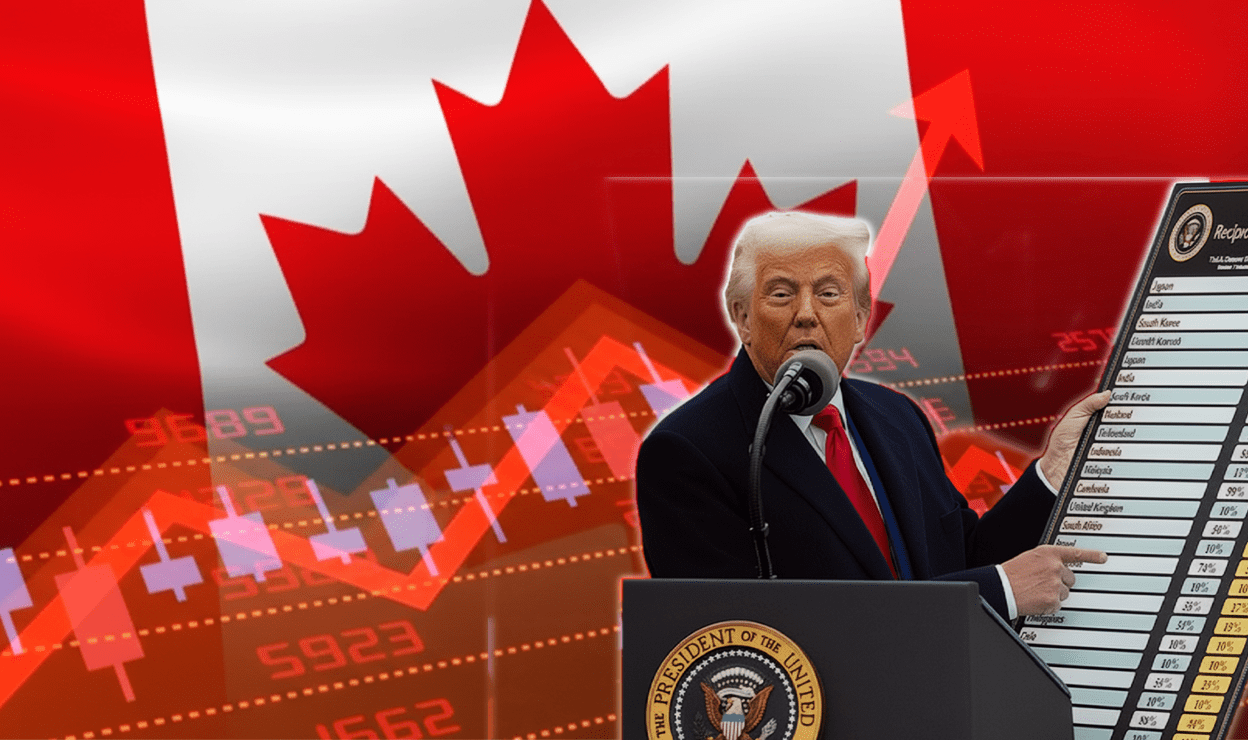
It’s no coincidence that this realignment is gathering pace while the U.S. is flexing its trade muscle. The policy unpredictability coming out of the U.S. has had a dual effect: disrupting long-standing trade flows and simultaneously opening space for Canada to step in. Research shows that U.S. tariffs on Canadian mineral and metal trade have had ripple effects across supply chains (energypolicy.columbia.edu). And experts argue Canada is using this moment to pivot from vertical dependence on U.S. trade toward horizontal diversification (medium.com).
Why Canada’s timing could change global supply-chains
For global firms, Canada’s appeal lies in its predictable regulatory environment, strong trade agreements such as CETA and CPTPP, access to U.S. infrastructure when needed, and the advantage of being separate from U.S. political swings. As Washington becomes more transactional, Canada’s reputation for stability is becoming a competitive asset.
This story is not simply about reacting to tariffs. It’s about timing. As U.S. policy becomes shakier, Canada is consciously reframing itself as the partner of choice for countries and companies looking to sidestep volatility. That shift means new contracts, new sourcing patterns, and new trade missions in regions where U.S. dominance once made diversification unnecessary.
For Canadian businesses, the shift is both challenge and opportunity. Exposure to U.S. tariffs still stings, but new markets are opening faster than at any time in recent decades. Supply-chains once built around a U.S. centre of gravity are being rewired: Southeast Asian sourcing, European partnerships, and Indo-Pacific export strategies are all expanding. Canada is increasingly becoming the “safe lane” in a congested global highway.
Potential Revenue & Job Impact Numbers for Canada
Total Combined Impact (Conservative National Estimate)
| Category | Revenue Impact (Annual) | Jobs Supported |
|---|---|---|
| Export diversification | C$12–18B | 45,000–60,000 |
| Redirected foreign investment | C$5–7B | 37,000–63,000 |
| EU + Asia export growth | C$12–18B | 120,000–180,000 |
| Total impact | C$29–43B/year | 202,000–303,000 jobs |

What this means for you, the consumer and business community
If you run a Canadian business — or an American company looking for stability — this may be the moment to reconsider how dependent you are on U.S. channels. Canada’s diversification push means more export opportunities, more favourable trade corridors, and the chance to anchor operations in a country seen as dependable by global partners.
For everyday consumers, expect to see more Canadian-produced goods, more emphasis on “Made in Canada,” and more visibility of Canada in emerging Asian and European markets.
In short, Trump’s trade war did more than raise tariffs. It shifted global confidence — and in that shift, Canada is emerging not as America’s sidekick, but as a partner of choice for the world.