Canada’s Indo-Pacific Trade Mission: $15B+ in Deals, Jobs, and Strategic Growth
When Prime Minister Mark Carney spoke at the World Economic Forum in Davos about the rising influence of “middle powers,” it sounded like a long-term vision. Within weeks, Canada began turning that vision into action — securing major international agreements, attracting investment, and opening new opportunities for Canadian workers.
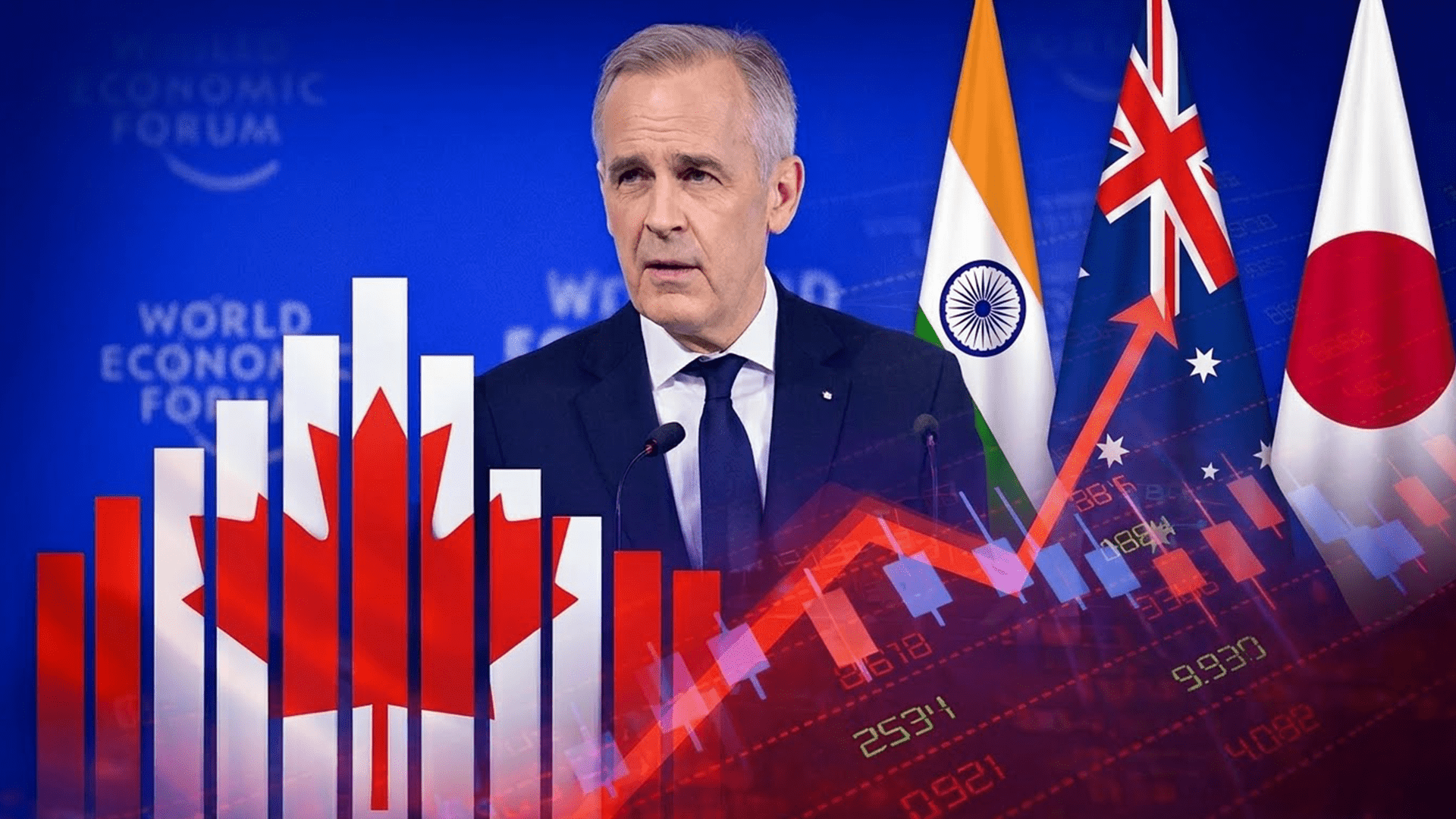
A multi-country mission across the Indo-Pacific focused on three key partners — India, Australia, and Japan — some of the fastest-growing and most strategically important economies in the world.
The objective was straightforward: expand Canadian exports, attract investment into Canada, and support long-term job creation.
The Indo-Pacific: A Strategic Growth Market for Canada
Canada’s engagement with the Indo-Pacific reflects a broader shift in economic strategy. According to the Government of Canada’s Indo-Pacific Strategy, the region accounts for more than 40 percent of global GDP and is expected to drive much of the world’s growth in the coming decades.
For Canada, this presents a clear opportunity. From energy and critical minerals to agriculture and technology, Canadian industries are well positioned to meet rising demand across the region.
More importantly, this is about positioning Canada within global supply chains — not just as a trading partner, but as a reliable supplier of resources and expertise.
India: $5.5 Billion in Deals and Expanding Technology Jobs
High-Level Meetings and Economic Agreements
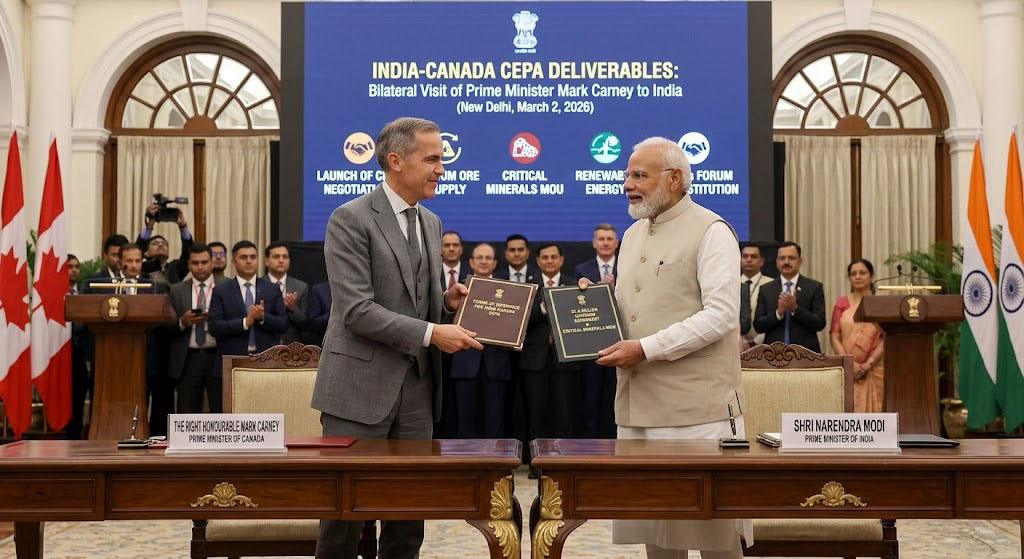
In India, Prime Minister Mark Carney met with Prime Minister Narendra Modi, alongside senior government officials and business leaders — signalling a broader effort to stabilize and strengthen bilateral ties.
Meetings included engagement with cabinet ministers responsible for trade, energy, and infrastructure, as well as leaders in India’s rapidly growing technology sector.
During the visit, Canada and India secured more than $5.5 billion in commercial agreements, according to the Prime Minister’s Office.
One of the largest agreements involves Saskatchewan-based uranium producer Cameco. The company signed a $2.6 billion contract to supply uranium between 2027 and 2035 — supporting Canadian exports and jobs in the mining sector.
Technology cooperation is also expanding. Indian global technology firm HCL Technologies announced plans to grow its Canadian workforce by 75 percent by 2030, creating thousands of high-skilled jobs.
Looking ahead, both countries aim to double bilateral trade to $70 billion by 2030.
Australia: Up to $10 Billion in Strategic Investment
Critical Minerals, Energy and Defence Cooperation
In Australia, Prime Minister Carney met with Prime Minister Anthony Albanese, along with senior ministers responsible for defence, resources, and industry.
The visit also included meetings with mining executives, energy leaders, and defence officials, reflecting the growing importance of supply chain security.
According to a joint announcement from the Government of Canada, agreements linked to the visit could unlock up to $10 billion in investment.
Key sectors include critical minerals, clean energy, artificial intelligence, and defence technologies — all essential to long-term economic growth and job creation.
These investments support high-paying jobs across mining, processing, and infrastructure development in Canada.
Japan: A Manufacturing Powerhouse Investing in Canada
Automotive Strength and Advanced Technology Collaboration
In Japan, Prime Minister Carney met with Prime Minister Fumio Kishida, along with leaders from the country’s automotive, energy, and technology sectors.
Japanese companies account for roughly 70 percent of the vehicles manufactured in Canada, according to the Prime Minister’s Office.
Automakers such as Toyota and Honda now produce more than three-quarters of vehicles assembled in Canada, based on data summarized in Canada’s automotive industry overview.
Across the country, Japanese investment supports more than 200,000 jobs. According to the Japan Automobile Manufacturers Association Canada, companies have invested over $12 billion in Canadian manufacturing.
These partnerships continue to expand into areas such as energy, critical minerals, semiconductors, and artificial intelligence.

From Strategic Vision to Economic Results
Trade missions often focus on diplomacy, but their real impact is economic. The agreements secured during this Indo-Pacific tour represent billions of dollars in trade and investment along with thousands of jobs connected to Canadian industries.
Across India, Australia, and Japan, the mission produced concrete outcomes: $5.5 billion in commercial deals, a $2.6 billion energy contract, and up to $10 billion in new investment commitments. These agreements support sectors that are central to Canada’s economic future, including energy, mining, advanced manufacturing, and technology.
The broader strategy is clear. By strengthening partnerships with other middle-power economies, Canada is expanding its global trade network and creating new opportunities for Canadian businesses.
If Davos introduced the idea that middle powers are rising, this mission demonstrated what that strategy looks like in practice: new markets, major investment, and real economic growth for Canada.