
Canada’s economy sent mixed signals in May. Hiring rebounded sharply, lifting the labour market and easing recession concerns, while economists continued debating whether the weakness in GDP truly qualifies as a technical recession. The case against a recession centres on still-strong job creation, falling unemployment, and steady wage growth, even as parts of the economy tied to trade and commodities remain soft.
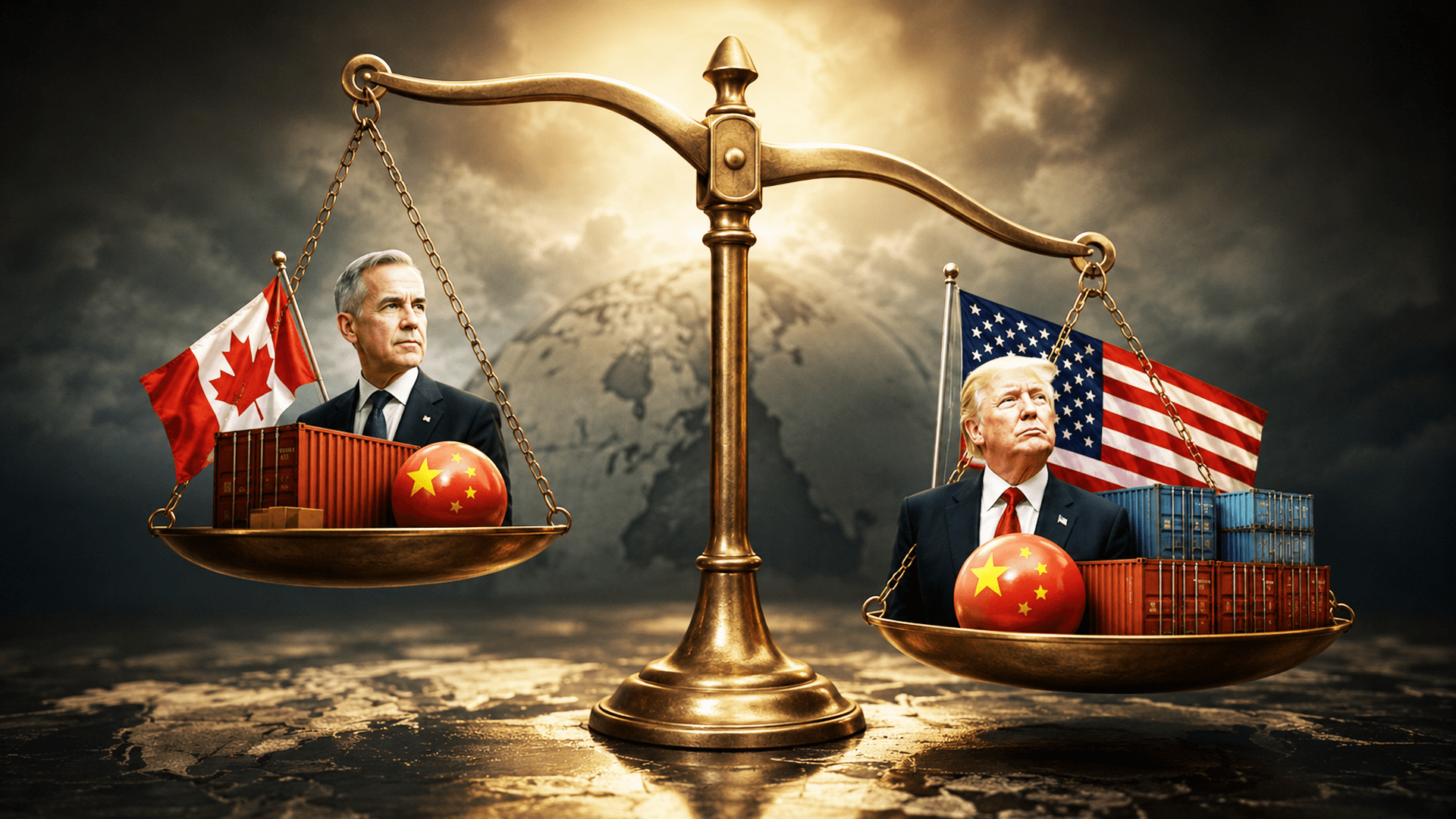
Attention is also shifting toward the upcoming review of the Canada-United States-Mexico Agreement (CUSMA). International Trade Minister Dominic LeBlanc has already begun early engagement in the United States ahead of July negotiations, focusing on trade stability, supply chains, and core industrial sectors.
Job Creation Delivered a Surprise Win
After several soft months, Canada’s labour market bounced back in May. According to Statistics Canada, employment increased by 88,000 positions, the strongest monthly gain since late 2025. Full-time jobs accounted for most of the increase, while the unemployment rate fell to 6.6%.
Construction, transportation, recreation, and hospitality all posted gains. Ontario and British Columbia led provincial gains, reflecting broad-based hiring strength across service and infrastructure-related sectors.
The report suggests businesses are still hiring despite uncertainty around tariffs and slower economic growth. For households, the numbers reinforce that the labour market remains more resilient than many expected.
The Reality of a Technical Recession
Even with stronger hiring, questions around a technical recession have not disappeared.
A technical recession is typically defined as two consecutive quarters of declining real GDP. Some analysts argue Canada does not fully meet the spirit of that definition, since employment has expanded, unemployment has improved, and wages remain relatively firm. Instead, weakness appears concentrated in specific areas such as trade, manufacturing, and commodity-driven GDP components like gold, rather than broad-based declines in consumer demand or household spending.
Manufacturing and retail activity remain under pressure, and business investment continues to respond cautiously to higher borrowing costs and global uncertainty. While the labour market improved in May, parts of the economy are still adjusting to slower growth conditions.
In other words, the economy is not experiencing the kind of widespread contraction typically associated with a classic recession, but it is also not operating in a strong expansion phase.
While some conclusions remain early-stage, the latest data suggests Canada is navigating a period of uneven growth rather than a straightforward economic downturn.
Health Monitor For May 2026
| Indicator | May 2025 | May 2026 | Trend / Notes |
|---|---|---|---|
| Unemployment | 7.0% | 6.6% ↑ | Labour market improved as hiring rebounded strongly across construction, transportation and hospitality. |
| Employment Growth | +8,800 jobs | +88,000 jobs ↑ | Hiring rebounded sharply, marking the first significant employment gain since late 2025. |
| Inflation | 1.7% | 2.25% ↑ | Inflation remains within the Bank of Canada’s target range, though price pressures have firmed. |
| GDP Growth (Annualized) | 1.7% | 1.2% ↓ | Growth expectations have softened amid tariff uncertainty and weaker business investment. |
| Housing Prices (Major Cities) | High → | High → | Affordability remains a challenge in Toronto, Vancouver, and Montreal despite lower interest rates. |
| Canadian Dollar (CAD/USD) | 0.73 | 0.74 ↑ | The loonie strengthened modestly following the stronger-than-expected May jobs report. |
| Trade Diversification from U.S. | 75.9% of exports | Approximately 74% of exports ↓ | Canada continues expanding trade with Europe and Indo-Pacific partners, though the U.S. remains the dominant market. |
| Technical Recession Risk | Low → | Moderate → | Strong gold exports and resilient hiring contrast with weaker underlying economic activity and uneven GDP performance. |
CUSMA Review: The Big Picture
The review of CUSMA is expected to become one of the most important economic stories of 2026. The agreement governs trade among Canada, the United States and Mexico and supports over US$1.8 trillion in annual trilateral trade.
Prime Minister Mark Carney’s government and Trade Minister Dominic LeBlanc have begun early consultations as Canada prepares for the agreement’s scheduled review. LeBlanc has also made multiple visits to the United States to open discussions with U.S. counterparts ahead of the formal July negotiations, focusing on trade stability, supply chains, and key industrial sectors.
Current CUSMA Positions & Recent Negotiations
| Issue | Canada’s Position | United States’ Position | Numbers to Know |
|---|---|---|---|
| The Joint Review Deadline |
|
|
16 Years: The extension length Canada is officially requesting ahead of the July 1, 2026 review deadline. |
| Aluminum & Steel Tariffs |
|
|
25% down to 15%: Tax drop on select machine parts, though raw metal faces up to 50% tariffs. |
| The “85% Metal Rule” |
|
|
85% Weight: The amount of U.S. melted steel/aluminum required in a product to get a low 10% tax rate. |
| Softwood Lumber |
|
|
150 Days: The hard time limit placed on broad global import surcharges to give markets breathing room. |
| Car Manufacturing |
|
|
50% American: Proposed content threshold required for tax-free vehicle movement. |
Why It Matters
Canada’s economy remains closely tied to both the United States and Mexico. As supply chains evolve and countries compete for investment, the outcome of the CUSMA review could shape Canadian manufacturing, energy, agriculture, and technology sectors for years to come.
Globally, countries are working to reduce supply chain risk and increase economic resilience. Canada is no exception. Maintaining stable access to North American markets remains one of the country’s biggest competitive advantages.
May’s economic story ultimately reflects two realities at once: Canadians are still finding jobs, but the broader economy continues to move through a period of uneven growth rather than a clear expansion or contraction.
Sources: Statistics Canada, Government of Canada (Global Affairs Canada), Bank of Canada.